

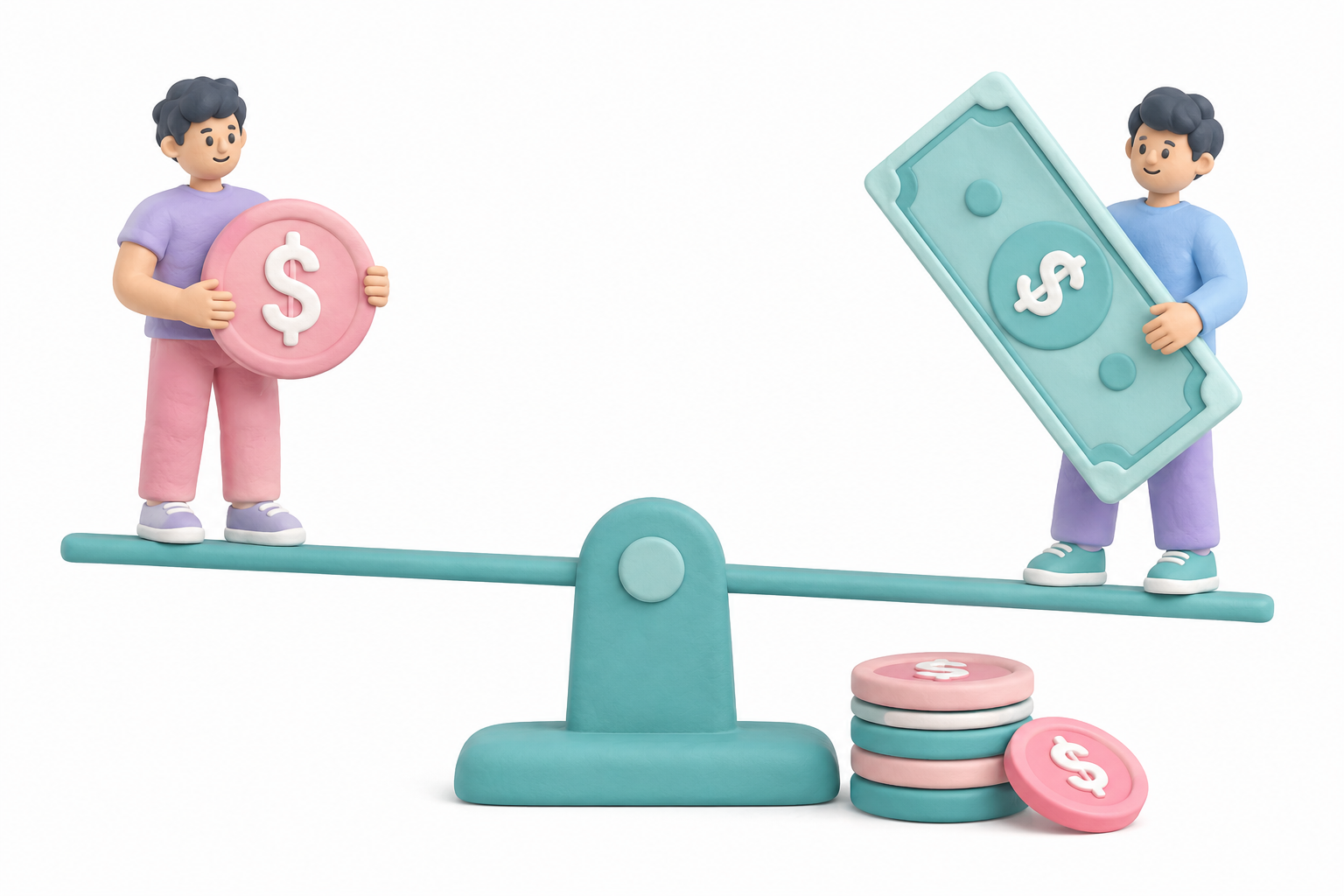
Discover the true cost of lead generation, what affects cost per lead, and how to improve lead quality and get better value from your marketing budget.
The Cost of Lead Generation?
If you’re investing in marketing but aren’t seeing enough quality enquiries, it’s natural to start questioning the numbers.
How much should lead generation cost?
What is a reasonable cost per lead?
Are you spending too much, or simply spending in the wrong places?
These are important questions, but focusing only on the cost of lead generation can lead businesses in the wrong direction. The cheapest lead isn’t always the most profitable lead. In fact, a low cost per lead can become very expensive when your sales team spends hours chasing people who were never likely to buy.
The real goal isn’t to generate the most leads for the lowest possible price. It’s to build a lead generation strategy that attracts the right prospects at a cost that makes commercial sense.
Cost per lead matters, but cheaper does not always mean better. Ten qualified leads with genuine buying intent can be far more valuable than 100 low-cost enquiries that never convert.
In this guide, you’ll learn what lead generation costs, how cost per lead is calculated, the key factors that influence lead generation costs, and how to determine whether your marketing investment is generating quality leads and real business value.
There Is No Fixed Price for Lead Generation.
Lead generation isn’t a product you buy off the shelf. It’s a strategy made up of different channels, tools and activities working together to attract potential customers.
Depending on your goals, it could include:
- Search Engine Optimisation (SEO)
- Google Ads
- Booking a consultation
- Social media advertising
- Content marketing
- Email marketing
- Landing pages
- Website optimisation
- Lead magnets
- CRM systems
The cost of lead generation will depend largely on which combination of channels best suits your business, your target audience, and your goals. Some businesses may achieve stronger results through SEO and content marketing, while others may rely more heavily on paid search, social media, email marketing, or a combination of several channels to consistently attract qualified leads.
Why the Cost of Lead Generation Matters?
Marketing budgets are rarely unlimited, which means every rand invested in lead generation needs to contribute towards a larger commercial objective. Generating enquiries is important, but ultimately, those enquiries need to create opportunities that can turn into customers and revenue.
This is where businesses can make an expensive mistake: they optimise for cheap leads instead of profitable customers.
Imagine Campaign A generates 100 leads at R100 each, giving you a cost per lead of R100. Campaign B generates only 25 leads at R300 each, making its cost per lead three times higher.
At first glance, Campaign A appears to be the obvious winner.
But cost per lead only tells you what it cost to generate the enquiry. It does not tell you what happened next.
If only two leads from Campaign A become customers, while ten leads from Campaign B convert, the picture changes completely. Campaign B may have generated fewer and more expensive leads, but those leads were significantly more valuable because they were more likely to become paying customers.
This is why understanding the true cost of lead generation means looking beyond the initial enquiry. Businesses need to consider lead quality, conversion rates, cost per customer, and ultimately the revenue generated from their marketing investment.
A lower cost per lead might look impressive on a marketing report, but if those leads rarely become customers, the cheapest campaign can quickly become the most expensive one.
Imagine:
- Campaign A generates 100 leads at R100 each, giving you a cost per lead of R100.
- Campaign B generates only 25 leads at R300 each, making its cost per lead three times higher.
At first glance, Campaign A appears to be the obvious winner.
But cost per lead only tells you what it cost to generate the enquiry. It does not tell you what happened next.
If only two leads from Campaign A become customers, while ten leads from Campaign B convert, the picture changes completely. Campaign B may have generated fewer and more expensive leads, but those leads were significantly more valuable because they were more likely to become paying customers.
This is why understanding the true cost of lead generation means looking beyond the initial enquiry. Businesses need to consider lead quality, conversion rates, cost per customer, and ultimately the revenue generated from their marketing investment.
A lower cost per lead might look impressive on a marketing report, but if those leads rarely become customers, the cheapest campaign can quickly become the most expensive one.

Stop Buying Leads. Start Building Demand.
There is an important difference between generating leads and creating demand, and understanding that difference can change how you think about your marketing budget.
Paid campaigns can put your business in front of potential customers almost immediately, making them extremely valuable when you need to generate enquiries quickly. The challenge is that much of that visibility depends on continued investment. When the advertising stops, the traffic and leads can slow down just as quickly.
Building authority works differently because the value can continue long after the initial investment.
For example:
-
A useful article becomes a long-term discovery asset.
It can rank in search results, appear in AI-generated answers, be shared on social media, support email campaigns, and introduce potential customers to your expertise.
-
A well-optimised website works around the clock.
It can attract, educate, and convert potential customers month after month without requiring you to pay for every individual visit.
-
A strong case study builds trust at the point of decision.
One successful customer story can reassure hundreds of future prospects who are comparing your business with competitors.
-
Helpful content creates demand before someone is ready to buy.
By answering questions and demonstrating expertise early in the buying journey, your business can become a familiar and trusted option when that person is eventually ready to make a decision.
This changes how businesses should think about lead generation pricing. Some marketing activities are primarily an expense that generates an immediate result, while others have the potential to become long-term marketing assets that continue creating value over time.
Neither approach should exist in isolation. A strong lead generation strategy should ideally do both: create opportunities today while building the visibility, authority, trust, and demand that can generate opportunities tomorrow.
How Should You Calculate Cost Per Lead?
The basic calculation is:
Cost Per Lead = Total Marketing Spend ÷ Number of Leads Generated
For example:
If you spend R10,000 on a campaign and generate 50 leads:
R10,000 ÷ 50 = R200 per lead
Your CPL is R200.
But that number only tells part of the story.
You also need to know:
- How many leads were qualified?
- How many became sales opportunities?
- What was the average sale value?
- What was your customer acquisition cost?
- How much revenue did the campaign generate?
That’s when cost per lead becomes commercially meaningful, because you’re no longer measuring what it costs to generate an enquiry, but what it costs to create a genuine opportunity for your business.
Think Beyond Cost Per Lead
Let’s take the calculation further.
Suppose two campaigns each cost R10,000.
Campaign A
100 leads × R100 CPL = R10,000
But only two become customers.
Your effective marketing cost per new customer is R5,000.
Campaign B
25 leads × R400 CPL = R10,000
But ten become customers.
Your effective marketing cost per new customer is R1,000.
Campaign B has a cost per lead four times higher than Campaign A.
Yet it acquires customers at one-fifth of the marketing cost.
This is exactly why chasing the lowest CPL can be misleading.
The metric that looks more expensive may actually be producing the better business result.

The Hidden Costs of Lead Generation
When businesses calculate their digital marketing costs, they often start with the most visible expense: how much they are spending on advertising.
But your advertising budget is only part of the picture.
Behind every successful lead generation campaign is a collection of people, tools, content, technology, and processes that help turn marketing activity into actual business opportunities.
These additional costs can include:
- Creative production – graphic design, photography, video, and advertising creative
- Content creation – articles, guides, case studies, emails, and landing page copy
- Technology – CRM platforms, marketing automation, tracking, and analytics tools
- Website optimisation – improving speed, user experience, forms, and conversion paths
- Campaign management – monitoring, testing, reporting, and continually improving performance
- Sales resources – the time spent qualifying leads, making calls, preparing proposals, and following up
These should not automatically be viewed as unnecessary expenses. In many cases, they are the infrastructure that makes your marketing investment work.
You can spend thousands driving traffic to a website, but if the website is slow, the message is unclear, the enquiry process is complicated, or nobody follows up with the leads, increasing the advertising budget is unlikely to solve the problem.
One Like Insight: Sending more paid traffic to a website that doesn't convert can simply mean spending more money to discover that something else in the lead generation process is broken.

Final Thought: The Real Question Isn't "How Much Does Lead Generation Cost?"
The cost of lead generation isn’t simply the amount you spend on advertising. It is the total investment required to attract the right people, earn their trust, convert their interest into an opportunity, and ultimately turn that opportunity into revenue.
That is why the real question isn’t:
“How much does lead generation cost?”
A better question is:
“What does it cost to acquire a profitable customer?”
That small shift changes the way you evaluate marketing. Instead of focusing only on generating more leads at a lower cost, you start looking at the bigger commercial picture:
- Which leads actually become customers?
- Which channels generate the strongest opportunities?
- Where are potential customers dropping out?
- Which marketing activities continue creating value over time?
These questions matter because cheap leads can look good on a marketing report, but qualified leads look much better on your bottom line.
Businesses that understand this stop chasing the maximum number of enquiries for the lowest possible price. Instead, they build a lead generation strategy around attracting better prospects, improving conversion rates, and investing more intelligently in the channels and activities that actually produce customers.
Because ultimately, the goal of lead generation isn’t to create impressive marketing reports.
It’s to create customers and contribute to sustainable business growth.
It takes just One Like to convert. Make sure it’s the right one!
FAQ
Lets Recap!
The cost of lead generation depends on your industry, competition, audience, marketing channels and business objectives. There is no universal price because every business requires a different combination of marketing activities.
SEO and paid advertising have different cost structures. SEO usually takes longer to build momentum but can continue generating organic visibility over time. Paid advertising can generate traffic immediately but generally requires continued spending to maintain that visibility.
Lead generation pricing can be influenced by industry competition, audience targeting, advertising costs, content requirements, website performance, marketing technology and the complexity of your sales process.
You should measure both. CPL helps you understand marketing efficiency, while lead quality tells you whether those enquiries have a realistic chance of becoming customers. Neither metric should be viewed in isolation.

