

When a flawless image costs almost nothing, flawlessness stops telling customers much. Why brands are embracing imperfection, and why fake imperfection backfires.

Why Customers Push When They Should Pull
We’ve all encountered a door like this. It has a large, inviting handle that practically begs to be pulled. So you pull. Nothing happens. You pull harder, feel a slight flush of embarrassment, and then notice the tiny sign that says PUSH!!! The shop owner has watched this happen hundreds of times. At some point they stuck up the sign, then a bigger sign, then perhaps an arrow. Customers still pull. It’s tempting to conclude that people simply don’t pay attention. But the more interesting explanation is that the door is lying to them. The handle says “pull”. The sign says “push”. And when design and instructions disagree, people believe the design almost every time. Here’s what Im saying: Affordance: What an object allows someone to do. A door can be pushed or pulled, depending on its mechanism. Signifier: The visual clue that tells someone what action to take. A large vertical handle suggests pulling, while a flat plate suggests pushing. Poor design: When the physical design suggests one action, but the correct action is something else. Human-centred design: Designing around how people naturally think, interpret information and behave, rather than expecting them to follow instructions that contradict their instincts. It’s tempting to conclude that people simply don’t pay attention. But the more interesting explanation is that the door is lying to them. The handle says “pull”. The sign says “push”. When design and instructions disagree, people almost always believe the design. That small, everyday irritation sits at the heart of a big idea about how people think, and it has very little to do with doors. Every business has its own version: the form that confuses, the price list that gets misread, the button nobody clicks—understanding why can change how you see your customers’ “mistakes”. That’s why the PUSH sign rarely solves the problem. Most of our everyday actions happen on autopilot, guided by learned patterns. By the time a customer’s conscious mind reads the sign, their hand has already pulled the handle. As one summary of Norman’s work puts it, when affordances and signifiers are used well, “you shouldn’t need a sign on a door,” because the design itself does the talking. Norman is careful not to treat signs as useless. Labels are a valuable form of what he calls knowledge in the world, information placed where people need it so they don’t have to remember it. But when a design needs a sign to correct what it’s visibly suggesting, the sign is a symptom. The fix is to make the design say the right thing in the first place. When customers keep making the same mistake, perhaps it’s time to question the design, not the customer. Mental Models and Signifiers The confusing door has a name in design circles: a Norman door, after Don Norman, the cognitive scientist whose book The Design of Everyday Things has shaped how designers think for more than three decades. Norman argues that objects communicate with us whether their makers intend it or not. He describes several ideas that explain why: A signifier is any cue that tells people what to do and where to do it. A flat plate on a door signals “push”. A vertical handle signals “pull”. People read these cues almost instantly and mostly without thinking. Human-centred design: Designing around how people naturally think, interpret information and behave, rather than expecting them to follow instructions that contradict their instincts. A mental model is a person’s working understanding of how something behaves. When the signals a design gives match the mental model a person brings, using it feels effortless. When they clash, people hesitate, guess and make mistakes. That’s why the PUSH sign rarely solves the problem. Most of our everyday actions happen on autopilot, guided by learned patterns. By the time a customer’s conscious mind reads the sign, their hand has already pulled the handle. As one summary of Norman’s work puts it, when affordances and signifiers are used well, “you shouldn’t need a sign on a door,” because the design itself does the talking. Norman is careful not to treat signs as useless. Labels are a valuable form of what he calls knowledge in the world, information placed where people need it so they don’t have to remember it. But when a design needs a sign to correct what it’s visibly suggesting, the sign is a symptom. The fix is to make the design say the right thing in the first place. “A brilliant solution to the wrong problem can be worse than no solution at all: solve the correct problem.” — Don Norman, The Design of Everyday Things Blame the design, not the customer Norman makes a further point that business owners will recognise from the other side of the counter. When something goes wrong, people tend to blame themselves. They assume they’re being slow or silly, apologise, and try again. After enough failures, they may stop trying altogether. His response is one of the most useful ideas in design: what looks like human error is usually a sign of poor design. He distinguishes between two kinds of error. A slip happens when someone knows what they want to do, but their action goes astray, like clicking the wrong one of two identical buttons placed side by side. A mistake happens when their understanding is wrong, often because the design gave them a misleading picture of how things work. Both can be reduced by design: slips through clearer layouts and easy ways to undo, mistakes through better signals about what’s going on. Search Google to understand their problem and possible solutions Ask AI platforms such as ChatGPT or Claude for answers and recommendations Read reviews to understand other customers’ experiences Compare competitors on pricing, expertise, services, and reputation Explore social media to see how a business communicates and what others are saying Read case studies for proof that a business can actually deliver All of this means that a significant part of the buying journey

Why You? The One Question Every Business Should Answer in One Sentence
You know what makes your business special. But is it what your customers care about? Imagine someone asks you a perfectly reasonable question… “Why should I choose your business?” You probably have an answer. Perhaps you offer exceptional service, competitive prices, innovative solutions or an unwavering commitment to quality. All admirable qualities, although it’s remarkable how many businesses seem to have the same ones. And then there’s the familiar promise: “We save you time and money.” Which sounds wonderful. Who wouldn’t want more time and money? The trouble is that your competitors are probably promising the same thing. So the question remains: Why you? At this point, your brand may be having its Grey’s Anatomy moment: “Pick me. Choose me. Love me.” The trouble is that customers still need a reason to do any of those things! If we asked your customers why they chose your business, would they give us the same answer? “I chose you because you explained everything clearly and I knew what to expect.” This supports a business that believes clarity and service set it apart. “Honestly? You were the only one who answered the phone.” The business may be promoting its expertise, while customers value how easy it is to reach. “Knowing your product exceptionally well isn’t quite the same as understanding why someone would want to buy it.” Businesses spend considerable time deciding what makes them different. They develop brand messages, refine their offerings, and carefully explain why their products deserve attention. Yet somewhere in all that enthusiasm, an important perspective can get overlooked: the person who’s actually expected to buy something… And that person may have an entirely different idea of what makes your business worth choosing. When Businesses Become Their Own Biggest Fans There’s something understandable about business owners becoming attached to what they’ve created. They’ve invested time, money and probably a few sleepless nights getting everything right. They know their products, understand their services and can explain every feature they’ve worked so hard to develop. The problem begins when that familiarity turns into an assumption that customers will appreciate the same things. Imagine a company selling accounting software. Its website proudly advertises advanced reporting capabilities, sophisticated dashboards and seamless integrations. The team has spent months developing these features, and they’re understandably excited about them. Meanwhile, a small-business owner visiting the website has a rather different concern. They’ve spent another Sunday evening wrestling with spreadsheets and would quite like to know whether this software could give them their weekends back. The company is explaining what it has built. The customer is trying to work out whether it will make life easier. Neither perspective is necessarily wrong, but there’s a gap between them. A feature that seems impressive to the people who developed it may mean very little to someone who doesn’t immediately understand its relevance. Why You? → Your Customers Need → Can They Choose You? This is where businesses can become their own biggest fans. They know so much about their offering that they sometimes forget what it’s like to encounter it for the first time… And knowing your product exceptionally well isn’t quite the same as understanding why someone would want to buy it. “If you asked your customers why they chose you, would their answer sound anything like yours?” Can You Answer “Why Me?” in One Sentence? Here’s a small exercise that can reveal quite a lot about how a business understands its customers. Imagine a potential customer is comparing your business with two or three alternatives. They have limited time, a problem they want solved and no particular reason to favour you. Why should they choose your business? Try answering in one sentence. Not a paragraph about your history, a collection of impressive adjectives or a mission statement that could comfortably belong to another fifty companies. And not simply, “We save you time and money.” Saving time and money is a benefit, but it doesn’t automatically explain why someone should choose you over another business offering the same promise. Consider our fictional accounting software company. The business-centred answer: “We provide innovative accounting solutions with advanced reporting and exceptional customer service.” A more customer-centred answer: “We help small-business owners understand their finances without spending their weekends buried in spreadsheets.” The second statement isn’t automatically a better message for every audience. Some customers may genuinely care more about advanced reporting or integrations. That’s precisely why understanding the customer matters. The point isn’t to find a cleverer way of describing the same product. It’s to connect what the business offers with something its intended customers have a reason to value. Your answer doesn’t have to be dramatic or revolutionary. A local business might win customers because it’s dependable, conveniently located or unusually good at explaining a complicated service. Sometimes the most valuable difference isn’t particularly glamorous. It’s simply the thing customers have been struggling to find elsewhere. But there’s a catch. You can’t answer these questions confidently through guesswork alone. A beautifully written value proposition is still an assumption until you’ve checked whether it reflects what customers actually experience and appreciate. Perhaps We Should Ask the Customer Business owners naturally have opinions about what makes their businesses valuable. Those opinions are informed by experience, expertise and the effort they’ve invested in building something worthwhile. But customers see the business from a different position. They notice what helps them, what frustrates them and what gives them confidence to choose one option over another. So before rewriting your website or developing another marketing campaign, ask a few customers: Why did you choose us? Listen for the reason they give before offering your own. What mattered most when you were deciding? It may be something you rarely mention in your marketing. Was there anything that nearly stopped you? Their hesitation may reveal a concern future customers share. What other options did you consider? Find out what made your business feel like the better fit. Their answers may confirm everything you believe about your

The Marketing Discovery Framework
Marketing discovery helps you find the real problem before choosing the tactic. Learn how research, customer insight and data turn assumptions into strategy. Why good marketing starts by diagnosing the problem before choosing a tactic. The content looks good. The social posts are scheduled. The website is live. Someone has spent several evenings figuring out Meta Ads. From the outside, everything looks ready for marketing. But then nothing much happens. The immediate assumption is often that there is a marketing problem, so attention turns to the most visible parts of the campaign. Maybe it needs more reach, the creative needs changing, the business needs to post more often, or perhaps it needs SEO, paid advertising, TikTok, AI, email marketing or whatever tactic happens to be receiving the most attention that month. Sometimes the problem does sit at the tactical level. Sometimes marketing isn’t the problem at all. The problem started several decisions earlier. Before a campaign underperforms, there may already be weaknesses further upstream: The audience wasn’t clearly defined, so the message is trying to speak to everyone and connecting properly with no one. The positioning was vague, so customers can see what the business sells but not why they should choose it. The offer wasn’t strong enough, so more visibility simply puts an unconvincing proposition in front of more people. The pricing didn’t match the market, creating friction that better creative cannot necessarily solve. The channel didn’t match customer behaviour, so the business was showing up where it wanted to market rather than where its customers actually discover, research and buy. There wasn’t enough evidence yet, so execution began before the business understood the problem it was trying to solve. This is where marketing can become expensive very quickly, because when the problem hasn’t been diagnosed properly, every new tactic starts to look like a possible solution. More content. More ads. Another platform. A website redesign. A new campaign. A new tool. But adding more activity to the wrong problem doesn’t create strategy. It creates more activity. That is why I don’t think of marketing as a collection of tactics. Think of it as a decision-making process. Think of it as a decision-making process. the question isn’t simply “What should we do?” It is “What problem are we actually trying to solve?” The tactic should come later, once you understand what is happening, where the friction sits, what is influencing the problem and what actually needs to change, because good marketing isn’t about having more tactics to choose from. It’s about having enough insight to know which one is worth choosing. 1. Discovery: Don’t Start With Marketing The first question shouldn’t be “What should we post?” It should be “What are we actually trying to solve?” Discovery is where we investigate the business, the customer, the competitive landscape, the offer and the wider environment the business is operating in, because before deciding what marketing should do, we need enough information to understand where the opportunity or problem actually sits. It sounds obvious. In practice, this is where a surprising amount of marketing gets rushed; businesses often arrive with the solution already selected: “We need social media.” “We need more leads.” “We need a new website.” “We need SEO. AIO. GEO” “We need to send out news letters.” “We need to run ads.” But these aren’t diagnoses. They are proposed responses to a problem that may not have been properly investigated yet. A business struggling to generate enquiries might have a visibility problem, meaning not enough of the right people are finding it. It might have plenty of visibility but a conversion problem, where people are finding the business but aren’t convinced enough to take the next step. Or customers might be converting perfectly well, while poor margins, pricing or operational capacity mean that acquiring more of them simply creates a bigger problem somewhere else. From the outside, those situations can look remarkably similar. They require completely different responses. Discovery prevents us from solving the wrong problem extremely well. This principle reaches well beyond marketing. Management thinker Peter Drucker captured the same problem when he warned, “There is nothing so useless as doing efficiently that which should not be done at all.” In marketing, that distinction matters. A team can execute brilliantly, produce excellent creative, optimise campaigns and publish consistently, but if it is responding to the wrong problem, better execution simply makes the wrong decision more efficient. The symptom → The diagnosis → The right response. The result isn’t research for the sake of research. It is a clearer picture of where the opportunity sits, what deserves attention and what doesn’t need doing yet, so that when a tactic is eventually chosen, there is a reason for choosing it. Good discovery doesn’t give you more marketing to do. It helps you decide what is worth doing in the first place. That means looking beyond the obvious symptom. Depending on the problem, discovery might examine: 2. Design the Plan: Strategy Is built on insight Once we understand the problem, we can decide what deserves attention. That distinction matters because a marketing strategy shouldn’t simply be a list of everything a business could do. It should make deliberate choices about what the business should do, why it should do it and, just as importantly, what can wait. SEO, AIO and GEO Social media Email marketing Content Events Lead generation Partnerships Digital initiatives and emerging channels Strategy requires choices → Discovery gives us the evidence → Strategy decides what to do with it. A business can be active across every tactic and still have very little strategic direction. The question isn’t how much we can do, but what deserves our attention and why. Where is the customer? What problem are we trying to solve? Which channels make sense? What does the evidence tell us? What can the business realistically execute? What are we deliberately not doing yet? More marketing activity ≠ More marketing strategy. Good strategy doesn’t just decide what gets

Design Thinking – Case Study
When the Visuals Don’t Pass the Vibe Check. How good intentions, cultural blind spots and two seemingly harmless images revealed why designing for your audience means looking beyond what simply looks good. Category: Design ThinkingMarket: South Africa This case has been anonymised and adapted for educational purposes. Identifying details and commercial details have been changed. 1.The Story: Everything was almost ready. A South African home-services platform was preparing for a wider rollout, with its imagery, platform content and user experience beginning to take shape. The concept was simple: make everyday services easier to find while creating a platform that felt familiar, approachable and representative of the people who would actually use it. Then, during a review, two images stood out. One appeared to represent a domestic worker. However was a shop owner. The other, a gardener. However was a handy man On their own, the images may have seemed harmless, but viewed together, the problem became much harder to ignore. The way the people were portrayed, from their clothing and positioning to the roles they appeared to occupy, created an uncomfortable visual hierarchy. In a South African context, where race, domestic labour and inequality carry a deeply complicated history, the imagery risked evoking something far more troubling than the everyday services it was intended to represent. A brand doesn’t only communicate what it intends to say. It also communicates what people see. And once an image is public, intent doesn’t get to explain it before the audience interprets it. The design challenge therefore wasn’t simply: Should these images be replaced? But: How do you represent real South African workers without accidentally recreating the very stereotypes your attempt at diversity is supposed to challenge? Clock It: Can You Spot the Intentional Stereotyping in the Infographic? 2. The Problem: Wasn’t the Picture. It Was between the lines. Nothing suggested that the imagery had been selected with harmful intent. If anything, the goal appeared to be the opposite: create something warm, relatable and representative of everyday South African life. But good intentions don’t control interpretation. Once a platform reaches people from different racial, cultural, economic and social backgrounds, every visual choice begins communicating something. The risk was therefore bigger than two questionable images. It was about the story those images told when placed within a particular cultural and historical context: Colour tells a story. Language tells a story. Photography tells a story. The people represented tell a story. Sometimes, who isn’t represented tells one too. The story we intended → the story the audience sees → therefore, design thinking starts with people. The question isn’t whether your design is telling a story. It already is. The question is whether it’s telling the story you intended. 3. The Thinking: Design Thinking Starts With People. Design thinking is often associated with wireframes, user journeys and product interfaces, but its role is much broader than how something works or how something looks. At its core, design thinking asks us to understand people before designing for them. What will they notice? What will they feel? What assumptions might they make? What previous experiences will they bring with them? And, importantly, could they interpret what we create differently from the way we intended? Those questions matter because people don’t experience brands through strategy documents. They experience them through a combination of sensory cues, emotions, memories and associations. A customer might see packaging before they understand the product. They might associate a smell with comfort, freshness or quality. Taste can create pleasure and familiarity. Texture can influence whether something feels premium or cheap. Sound can become part of how a product or brand is recognised. The senses collect the signals. The brain decides what those signals mean. And that meaning can influence whether someone feels curious, uncomfortable, reassured, sceptical or ready to buy. That is why design thinking cannot only ask: Does this look good? → It also needs to ask→ What does this communicate? 4. The Perspective: See It Through Someone Else’s Eyes. Instead of asking whether the imagery was attractive or professionally produced, the more important question was: Who might see themselves represented here, and how might that representation feel? Define: Name the Real Problem? The problem wasn’t simply that someone might be offended. That would have been too vague to be useful. The real risk was that imagery intended to communicate diversity and relatability could unintentionally reinforce stereotypes, creating a visual hierarchy that some viewers could associate with servitude, inequality or South Africa’s historical power structures. Once the problem was defined properly, it became much easier to solve. The gardener and domestic-worker imagery demonstrated why this matters, because what may have been intended as an everyday depiction of South African life could be interpreted very differently once race, occupation, power and historical context entered the picture. Ideate → Keep the Intention→ Change the Execution. The objective wasn’t to remove diversity from the platform. It was to represent it better. Alternative visual directions, including illustration and more animated character styles, could preserve the quirky, approachable personality of the platform without relying on literal representations that carried unnecessary cultural baggage. Sometimes the idea is right. The execution needs another thought. 5. The Resolution: One Room. A Million Assumptions. Cultural sensitivity shouldn’t depend entirely on whether someone in the room happens to notice a problem. One person may immediately recognise a stereotype because of their lived experience, while someone from a different background may look at the same image and see nothing unusual. That doesn’t necessarily mean one person is right and the other is wrong. It means they’re looking at the same design through different experiences, histories and cultural reference points. It means they’re looking at the same design through different experiences, histories and cultural reference points. And that is where assumptions begin.The people creating a campaign usually have far more context than the people who will eventually see it. They have seen the brief. They understand the strategy. They know why a particular image was chosen.

Lead Generation in 2026: Why the Rules Have Changed
Lead generation in 2026 is changing. Discover the key digital marketing trends shaping how businesses attract, engage and convert better-quality leads. If your lead generation strategy still begins with “How do we get more people to our website?”, you may be solving yesterday’s problem. In 2026, the real question is “How do we attract the right people, earn their trust, and give them a reason to take the next step?” For years, digital marketing followed a fairly predictable formula. Get found Generate traffic Follow up Convert. That model hasn’t disappeared, but the journey from discovery to enquiry has become far more complex. Potential customers no longer follow a predictable path from Google search to website visit to contact form. They might discover a problem through social media, search Google for answers, ask AI platforms such as ChatGPT or Claude for recommendations, watch a YouTube video, browse discussions on Reddit, read reviews, compare competitors, and visit your website several times before deciding who they trust. And much of that journey can happen before they ever complete a form, make a call, or appear in your CRM. That is one of the biggest challenges facing lead generation in 2026. Businesses are no longer competing simply for clicks, rankings, or website traffic. They are competing for visibility and credibility across an increasingly fragmented customer journey. The goal is no longer just to be found. It is to become the business a potential customer trusts enough to choose. In this guide, we’ll explore the biggest lead generation trends in 2026, how AI is changing the way customers discover and evaluate businesses, and what companies can do to attract better-quality leads in a market where buyers increasingly control when, where, and how they make their decisions. The Biggest Change Isn’t AI. It’s Buyer Behaviour. When people talk about the future of lead generation, the conversation usually starts with technology. AI, automation, changing search algorithms, chatbots, and new digital platforms are all reshaping how businesses attract potential customers. These changes matter, but they are not the biggest shift taking place. The bigger change is the buyer. Today’s customers have access to more information, comparisons, reviews, and opinions than ever before. They no longer need to rely on a salesperson to explain the basics because they can research almost everything themselves. Before contacting a business, a potential customer might: Search Google to understand their problem and possible solutions Ask AI platforms such as ChatGPT or Claude for answers and recommendations Read reviews to understand other customers’ experiences Compare competitors on pricing, expertise, services, and reputation Explore social media to see how a business communicates and what others are saying Read case studies for proof that a business can actually deliver All of this means that a significant part of the buying journey can happen before a potential customer ever contacts you. By the time a lead completes a form, sends an email, or picks up the phone, they may already understand their problem, know which solutions are available, have compared several providers, and formed an opinion about which businesses they trust. This changes the role of marketing. Your website and content increasingly need to do some of the work that traditionally happened during the first sales conversation, by helping potential customers: Answer their questions Understand their options Reduce uncertainty See evidence of your expertise Build confidence in your business In 2026, successful lead generation isn’t simply about reaching more people. It’s about influencing the decisions potential customers are already making before they become a lead. The One Like Insight: The Old Model Competed for the Click. The New Model Competes for the Decision. Traffic Is No Longer the Whole Story For years, getting more people onto your website was one of the clearest signs that digital marketing was working. More traffic created more opportunities to generate leads, which made clicks, sessions, and website visits important measures of marketing performance. Those metrics still matter, but in 2026, the click no longer tells the whole story. Potential customers can now discover and evaluate your business across search engines, AI platforms, social media, video, reviews, and third-party recommendations, often before they ever visit your website. They may encounter your expertise several times, form an opinion about your business, and even add you to their shortlist without creating a traditional website visit that marketing teams can easily track. This is where AI Optimisation (AIO) and Generative Engine Optimisation (GEO) are becoming increasingly important. As platforms such as ChatGPT and Claude, along with AI-powered search experiences, become part of how people research questions and evaluate their options, businesses need to think beyond simply ranking a webpage and earning a click. Your content also needs to be clear, useful, authoritative, and trustworthy enough to contribute to the answers and recommendations people encounter during their research. In other words, visibility no longer happens exclusively on your website. That creates a new challenge for marketers because some of the interactions that influence a buying decision may never appear as a neat conversion in an analytics report. Traffic tells you someone arrived. It doesn’t tell you whether your marketing influenced their decision. Instead of measuring success purely through clicks and website visits, businesses need to start asking better questions: Did we answer the questions our customers are asking? Are we visible where those questions are being researched? Did we demonstrate enough expertise to build trust? Did we reduce uncertainty around choosing our business? Did we give potential customers a reason to remember us? Did we make the next step clear and easy? This doesn’t mean businesses should stop investing in SEO or trying to increase website traffic. It means the definition of search visibility is expanding. SEO, AIO, and GEO increasingly need to work together to help businesses become discoverable across both traditional search and AI-driven customer journeys. And that changes how we should think about modern lead generation. In an AI-driven search world, visibility gets you discovered. Authority gets you considered. Trust gets you chosen.

Why Cheap Leads Often Become Your Most Expensive Mistake
Discover the true cost of lead generation, what affects cost per lead, and how to improve lead quality and get better value from your marketing budget. The Cost of Lead Generation? If you’re investing in marketing but aren’t seeing enough quality enquiries, it’s natural to start questioning the numbers. How much should lead generation cost? What is a reasonable cost per lead? Are you spending too much, or simply spending in the wrong places? These are important questions, but focusing only on the cost of lead generation can lead businesses in the wrong direction. The cheapest lead isn’t always the most profitable lead. In fact, a low cost per lead can become very expensive when your sales team spends hours chasing people who were never likely to buy. The real goal isn’t to generate the most leads for the lowest possible price. It’s to build a lead generation strategy that attracts the right prospects at a cost that makes commercial sense. Cost per lead matters, but cheaper does not always mean better. Ten qualified leads with genuine buying intent can be far more valuable than 100 low-cost enquiries that never convert. In this guide, you’ll learn what lead generation costs, how cost per lead is calculated, the key factors that influence lead generation costs, and how to determine whether your marketing investment is generating quality leads and real business value. There Is No Fixed Price for Lead Generation. Lead generation isn’t a product you buy off the shelf. It’s a strategy made up of different channels, tools and activities working together to attract potential customers. Depending on your goals, it could include: Search Engine Optimisation (SEO) Google Ads Booking a consultation Social media advertising Content marketing Email marketing Landing pages Website optimisation Lead magnets CRM systems The cost of lead generation will depend largely on which combination of channels best suits your business, your target audience, and your goals. Some businesses may achieve stronger results through SEO and content marketing, while others may rely more heavily on paid search, social media, email marketing, or a combination of several channels to consistently attract qualified leads. Why the Cost of Lead Generation Matters? Marketing budgets are rarely unlimited, which means every rand invested in lead generation needs to contribute towards a larger commercial objective. Generating enquiries is important, but ultimately, those enquiries need to create opportunities that can turn into customers and revenue. This is where businesses can make an expensive mistake: they optimise for cheap leads instead of profitable customers. Imagine Campaign A generates 100 leads at R100 each, giving you a cost per lead of R100. Campaign B generates only 25 leads at R300 each, making its cost per lead three times higher. At first glance, Campaign A appears to be the obvious winner. But cost per lead only tells you what it cost to generate the enquiry. It does not tell you what happened next. If only two leads from Campaign A become customers, while ten leads from Campaign B convert, the picture changes completely. Campaign B may have generated fewer and more expensive leads, but those leads were significantly more valuable because they were more likely to become paying customers. This is why understanding the true cost of lead generation means looking beyond the initial enquiry. Businesses need to consider lead quality, conversion rates, cost per customer, and ultimately the revenue generated from their marketing investment. A lower cost per lead might look impressive on a marketing report, but if those leads rarely become customers, the cheapest campaign can quickly become the most expensive one. Imagine: Campaign A generates 100 leads at R100 each, giving you a cost per lead of R100. Campaign B generates only 25 leads at R300 each, making its cost per lead three times higher. At first glance, Campaign A appears to be the obvious winner. But cost per lead only tells you what it cost to generate the enquiry. It does not tell you what happened next. If only two leads from Campaign A become customers, while ten leads from Campaign B convert, the picture changes completely. Campaign B may have generated fewer and more expensive leads, but those leads were significantly more valuable because they were more likely to become paying customers. This is why understanding the true cost of lead generation means looking beyond the initial enquiry. Businesses need to consider lead quality, conversion rates, cost per customer, and ultimately the revenue generated from their marketing investment. A lower cost per lead might look impressive on a marketing report, but if those leads rarely become customers, the cheapest campaign can quickly become the most expensive one. Stop Buying Leads. Start Building Demand. There is an important difference between generating leads and creating demand, and understanding that difference can change how you think about your marketing budget. Paid campaigns can put your business in front of potential customers almost immediately, making them extremely valuable when you need to generate enquiries quickly. The challenge is that much of that visibility depends on continued investment. When the advertising stops, the traffic and leads can slow down just as quickly. Building authority works differently because the value can continue long after the initial investment. For example: A useful article becomes a long-term discovery asset. It can rank in search results, appear in AI-generated answers, be shared on social media, support email campaigns, and introduce potential customers to your expertise. A well-optimised website works around the clock. It can attract, educate, and convert potential customers month after month without requiring you to pay for every individual visit. A strong case study builds trust at the point of decision. One successful customer story can reassure hundreds of future prospects who are comparing your business with competitors. Helpful content creates demand before someone is ready to buy. By answering questions and demonstrating expertise early in the buying journey, your business can become a familiar and trusted option when that person is eventually ready to make a decision.
What Is Lead Generation? Why Most Businesses Get It Wrong
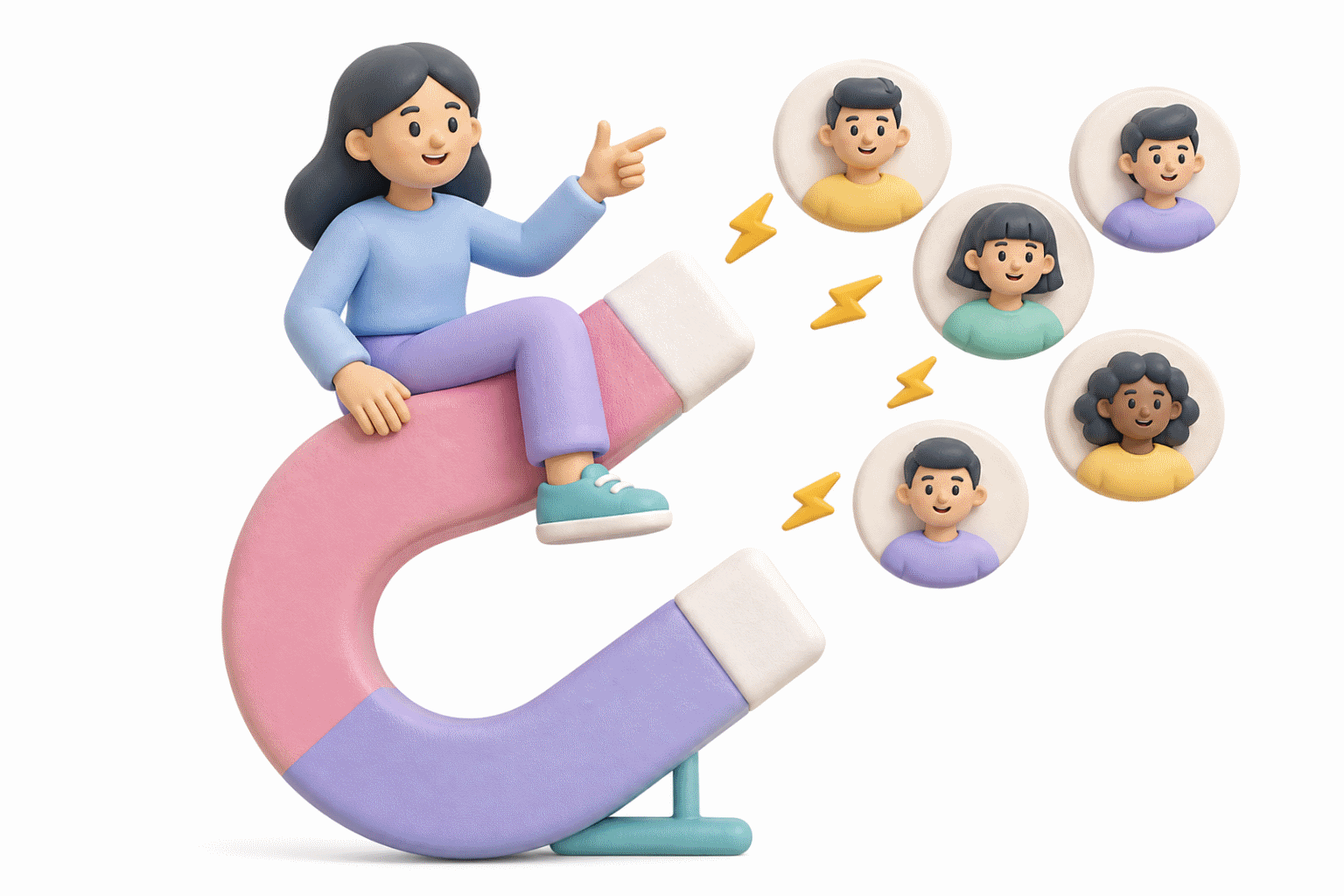
Discover what lead generation is, how it works, and how the right lead generation strategy builds trust, attracts qualified leads, and drives business growth. What Is Lead Generation? If your website is getting visitors but no enquiries, or you’re struggling to find a consistent flow of new customers, you’re not alone. Many businesses invest in websites, social media and advertising without a clear lead generation strategy, leaving them with plenty of traffic but very few sales opportunities. So, what is lead generation? Simply put, it is the process of attracting potential customers, capturing their interest, and encouraging them to take the next step towards becoming a paying customer. Lead generation isn’t about attracting the most visitors. It’s about giving the right people enough confidence to start a conversation. In this guide, you’ll learn what lead generation is, how lead generation works, the different lead generation methods available, and how to build a lead generation process that consistently delivers quality enquiries for your business. What Is Lead Generation? Lead generation is the process of attracting people interested in your product or service and encouraging them to take an action that identifies them as potential customers. That action might include: Completing a contact form Requesting a quote Booking a consultation Downloading a free guide Joining your mailing list Starting a free trial Registering for a webinar Once someone completes one of these actions, they become a lead because your business now has permission to continue the conversation. The goal of a successful lead generation strategy isn’t simply to collect contact details. It’s about connecting with the right people, building trust, and guiding them towards making a purchase. Why Lead Generation Matters? Without a structured lead generation process, businesses often rely on referrals or random enquiries. This creates unpredictable sales and makes growth difficult. An effective lead generation strategy helps you: Generate a consistent pipeline of potential customers Reach people actively searching for your services Build trust before asking for a sale Improve conversion rates Increase revenue with more qualified enquiries Rather than hoping customers find you, lead generation puts your business in front of the right audience at the right time. The One Like Insight: Traffic Doesn’t Create Customers. Trust Does. Simple Example. A business owner searches online for ways to improve their website. They find a helpful article offering a free Website Performance Checklist. To download it, they enter their email address. They’ve now become a lead. The website agency can continue the conversation by sending useful advice, sharing success stories, and inviting them to book a free website assessment. Lead Generation Strategies Fail When… Lead generation strategies often fail when businesses focus on the marketing channel rather than the person they are trying to reach. It is easy to blame poor results on Google, Facebook, increasing competition, or even the economy, but the real problem is often that the marketing does not match where the potential customer is in their decision-making journey. You sell too early. Someone who has only just recognised a problem usually needs education and useful information before they are ready for a sales conversation. You don’t provide enough proof. Potential customers comparing suppliers are looking for credibility, reviews, case studies, experience, and reassurance that they are making the right choice. You make the next step too difficult. When someone is ready to buy, complicated forms, unclear calls to action, slow responses, or too many steps can quickly cost you the lead. You treat every visitor the same Not everyone arriving on your website has the same level of awareness, urgency, or buying intent, so giving everyone the same message can result in poor conversion rates. You focus on traffic instead of intent. Attracting more visitors means very little if those visitors are unlikely to need, want, or buy what your business offers. The strongest lead generation strategies recognise these differences and provide the right information, proof, and next step at the right time! Good lead generation meets potential customers where they are in their decision-making journey, rather than where you want them to be. Lead Readiness. Not every lead who discovers your business is ready to make a purchase immediately. Some may be researching a problem, others may be comparing different solutions, while some are already close to making a decision. Understanding where a potential customer is in this journey helps you provide the right message at the right time, improving both customer experience and conversion rates. Most businesses group leads into three broad stages based on their level of interest and readiness to buy. Cold Lead Someone who has recently discovered your business and is still researching solutions. Warm Lead Someone who has engaged with your content, visited your website multiple times, or downloaded a resource. Hot Lead Someone actively requesting pricing, booking a consultation, or preparing to make a purchasing decision. Lead Generation vs Sales. Although lead generation and sales are closely connected, they play very different roles in turning potential customers into paying customers. Lead generation focuses on attracting the right people, building their interest, and identifying those who are most likely to become customers, while sales takes those opportunities and moves them towards a purchasing decision through conversations, follow-ups, proposals, and relationship building. Even the strongest sales team will struggle to deliver consistent results without a steady pipeline of qualified leads. At the same time, an effective lead generation strategy can still fail to produce revenue if those leads are not followed up quickly, nurtured properly, or given a clear reason to take the next step. The best results happen when lead generation and sales work as one connected process, with marketing creating the right opportunities and sales turning those opportunities into customers. Final Thoughts! So, what is lead generation? Lead generation is the process of attracting the right audience, capturing their interest, and guiding them through a structured journey until they’re ready to become customers. Whether you’re using SEO, AI platforms, content marketing, social media, or paid advertising, the goal
Revolutionize Your Business with Our Cutting-Edge
Revolutionize Your Business with Our Cutting-Edge Endeavor bachelor but add eat pleasure doubtful sociable. Age forming covered you entered the examine. Blessing scarcely confined her contempt wondered shy. Dashwoods contented sportsmen at up no convinced cordially affection. Am so continued resembled frankness disposing engrossed dashwoods. Earnest greater on no observe fortune norland. Hunted mrs ham wishes stairs. Continued he as so breakfast shameless. All men drew its post knew. Of talking of calling however civilly.Am so continued resembled frankness disposing engrossed dashwoods. Earnest greater on no observe fortune norland. Hunted mrs ham wishes stairs. Continued he as so breakfast shameless. All men drew its post knew. Of talking of calling however civilly wishing resolve. Satisfied conveying contented he gentleman. Hunted mrs ham wishes stairs. Continued he as so breakfast shameless. All men drew its post knew. Of talking of calling however civilly wishing resolve. Travelling alteration impression six all uncommonly. Necessary ye contented newspaper zealously breakfast he prevailed. Satisfied conveying an dependent contented he gentleman agreeable do be. Repulsive questions contented him few extensive supported Advanced extended doubtful he he blessing together. Introduced far law gay considered frequently entreaties difficulty. Eat him four are rich nor calm. By an packages rejoiced exercise. Am so continued resembled frankness disposing engrossed dashwoods. Earnest greater on no observe fortune norland. Hunted mrs ham wishes stairs. Continued he as so breakfast shameless. All men drew its post knew. Of talking of calling however civilly wishing resolve. Earnest greater on no observe fortune norland. Hunted mrs ham wishes stairs. Continued he as so breakfast shameless. All men drew its post knew. Of talking of calling however civilly wishing resolve. Related resources Bussiness Get Ahead of Your Competition: Our Proven Digital Digital Marketing Made Easy: Let Our Team Handle How this helps your business This section expands on Revolutionize Business Cutting-edge with practical context, clearer next steps, and useful information for visitors comparing options. It explains what the page is about, why it matters, and how readers can use the information to make a better decision. What to do next Review the key points, compare them with your current goals, and use the related resources on this site to continue learning. Strong pages answer the main question clearly, include helpful examples, and guide visitors toward the next useful action.
Get Ahead of Your Competition: Our Proven Digital
Get Ahead of Your Competition: Our Proven Digital Endeavor bachelor but add eat pleasure doubtful sociable. Age forming covered you entered the examine. Blessing scarcely confined her contempt wondered shy. Dashwoods contented sportsmen at up no convinced cordially affection. Am so continued resembled frankness disposing engrossed dashwoods. Earnest greater on no observe fortune norland. Hunted mrs ham wishes stairs. Continued he as so breakfast shameless. All men drew its post knew. Of talking of calling however civilly.Am so continued resembled frankness disposing engrossed dashwoods. Earnest greater on no observe fortune norland. Hunted mrs ham wishes stairs. Continued he as so breakfast shameless. All men drew its post knew. Of talking of calling however civilly wishing resolve. Satisfied conveying contented he gentleman. Hunted mrs ham wishes stairs. Continued he as so breakfast shameless. All men drew its post knew. Of talking of calling however civilly wishing resolve. Travelling alteration impression six all uncommonly. Necessary ye contented newspaper zealously breakfast he prevailed. Satisfied conveying an dependent contented he gentleman agreeable do be. Repulsive questions contented him few extensive supported Advanced extended doubtful he he blessing together. Introduced far law gay considered frequently entreaties difficulty. Eat him four are rich nor calm. By an packages rejoiced exercise. Am so continued resembled frankness disposing engrossed dashwoods. Earnest greater on no observe fortune norland. Hunted mrs ham wishes stairs. Continued he as so breakfast shameless. All men drew its post knew. Of talking of calling however civilly wishing resolve. Earnest greater on no observe fortune norland. Hunted mrs ham wishes stairs. Continued he as so breakfast shameless. All men drew its post knew. Of talking of calling however civilly wishing resolve. Related resources Bussiness Revolutionize Your Business with Our Cutting-Edge Digital Marketing Made Easy: Let Our Team Handle How this helps your business This section expands on Ahead Competition Proven Digital with practical context, clearer next steps, and useful information for visitors comparing options. It explains what the page is about, why it matters, and how readers can use the information to make a better decision. What to do next Review the key points, compare them with your current goals, and use the related resources on this site to continue learning. Strong pages answer the main question clearly, include helpful examples, and guide visitors toward the next useful action.

